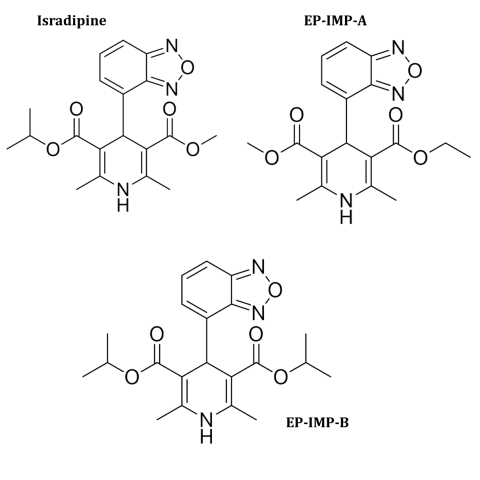
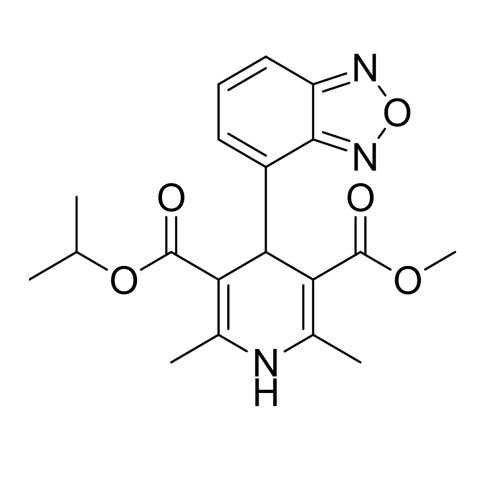
Isradipine is a dihydropyridine calcium channel blocker used primarily in the management of hypertension and, less commonly, angina pectoris. It was developed in the 1980s and approved for clinical use in the late 1980s and early 1990s after clinical trials demonstrated its effectiveness in lowering blood pressure by causing peripheral arterial vasodilation. Its history is marked by its utility as an antihypertensive agent with good vascular selectivity, but also by the recognition of dose-related adverse effects such as headache, flushing, and peripheral edema, which led to careful dose titration in clinical practice. Isradipine is a selective L-type calcium channel antagonist that reduces calcium influx into vascular smooth muscle, leading to decreased systemic vascular resistance and lowered blood pressure. It has been incorporated into antihypertensive treatment regimens, particularly in patients requiring additional blood pressure control. Its development included extensive clinical trials and post-marketing surveillance to ensure safety and efficacy across diverse patient populations.
BRAND NAMES
DynaCirc – original brand formulation
DynaCirc CR – controlled-release (long-acting) version
Prescal – used in some international markets.
MECHANISM OF ACTION
Isradipine is a dihydropyridine calcium channel blocker that acts primarily on vascular smooth muscle. It selectively inhibits L-type voltage-gated calcium channels, reducing the influx of calcium ions into arterial smooth muscle cells. Calcium is essential for muscle contraction; therefore, its reduced entry leads to relaxation of vascular smooth muscle.
PHARMACOKINETICS
Absorption
Isradipine is rapidly and well absorbed after oral administration from the gastrointestinal tract. However, its systemic bioavailability is relatively low (about 15–25%) because of extensive first-pass hepatic metabolism. Peak plasma concentrations are usually reached within 1.5 to 3 hours for immediate-release formulations.
Distribution
The drug is extensively bound to plasma proteins (approximately 95–98%), mainly to albumin and lipoproteins, which contributes to its large apparent volume of distribution.
Metabolism
Isradipine is extensively metabolized in the liver, primarily by the cytochrome P450 enzyme system, especially CYP3A4, into inactive metabolites. It undergoes significant first-pass metabolism after oral administration, which contributes to its low systemic bioavailability.
Elimination
Isradipine is eliminated mainly in the form of inactive metabolites via both renal and biliary routes. Less than 1% of the administered dose is excreted unchanged in the urine. The elimination half-life is relatively short, approximately 6 to 9 hours for immediate-release formulations, which supports twice-daily dosing.
PHARMACODYNAMICS
Isradipine is a dihydropyridine calcium channel blocker that selectively inhibits L-type voltage-gated calcium channels in vascular smooth muscle. By blocking calcium influx, it reduces intracellular calcium levels, leading to relaxation of arteriolar smooth muscle and resulting in vasodilation.
ADMINISTRATION
Isradipine is administered orally in the form of immediate-release capsules or extended-release tablets. It is usually taken once or twice daily depending on the formulation and clinical response. The drug can be taken with or without food, although consistent timing with meals is recommended to maintain stable plasma levels.
DOSAGE AND STRENGTH
Isradipine is available as immediate-release capsules in strengths of 2.5 mg and 5 mg, and as extended-release tablets in strengths of 5 mg and 10 mg. For the treatment of hypertension, the usual initial dose for immediate-release formulations is 2.5 mg twice daily, which may be gradually increased up to 5 mg twice daily depending on the patient’s response.
DRUG INTERACTIONS
Isradipine is primarily metabolized by CYP3A4, so drugs that inhibit or induce this enzyme can significantly alter its plasma concentrations. CYP3A4 inhibitors such as ketoconazole, itraconazole, erythromycin, clarithromycin, and grapefruit juice may increase isradipine levels, enhancing its hypotensive effects and risk of adverse reactions.
FOOD INTERACTIONS
Isradipine can be taken with or without food, but food may slightly increase its absorption and bioavailability without causing clinically significant changes in effect. However, grapefruit and grapefruit juice can markedly increase isradipine plasma concentrations by inhibiting CYP3A4-mediated metabolism, potentially enhancing hypotensive effects and side effects such as dizziness or flushing.
CONTRAINDICATIONS
Isradipine is contraindicated in patients with known hypersensitivity to isradipine or other dihydropyridine calcium channel blockers. It should not be used in patients with severe hypotension (markedly low blood pressure) or in those with cardiogenic shock.
SIDE EFFECTS
Headache
Dizziness or lightheadedness
Flushing (facial redness, warmth)
Peripheral edema (especially ankle swelling)
Hypotension
Reflex tachycardia (increased heart rate)
Palpitations
OVER DOSE
Overdose of isradipine primarily leads to excessive vasodilation and marked hypotension, which may be accompanied by reflex tachycardia, dizziness, syncope, and flushing. In severe cases, profound hypotension can result in shock, bradycardia or tachyarrhythmias, metabolic acidosis, and cardiovascular collapse.
TOXICITY
Toxicity from isradipine results from excessive calcium channel blockade leading to marked peripheral vasodilation and cardiovascular depression. Clinically, it presents with severe hypotension, dizziness, flushing, syncope, reflex tachycardia, and in severe cases, shock and cardiovascular collapse.